
7-Day Himachal Pradesh Monsoon Itinerary – Green Misty Trails
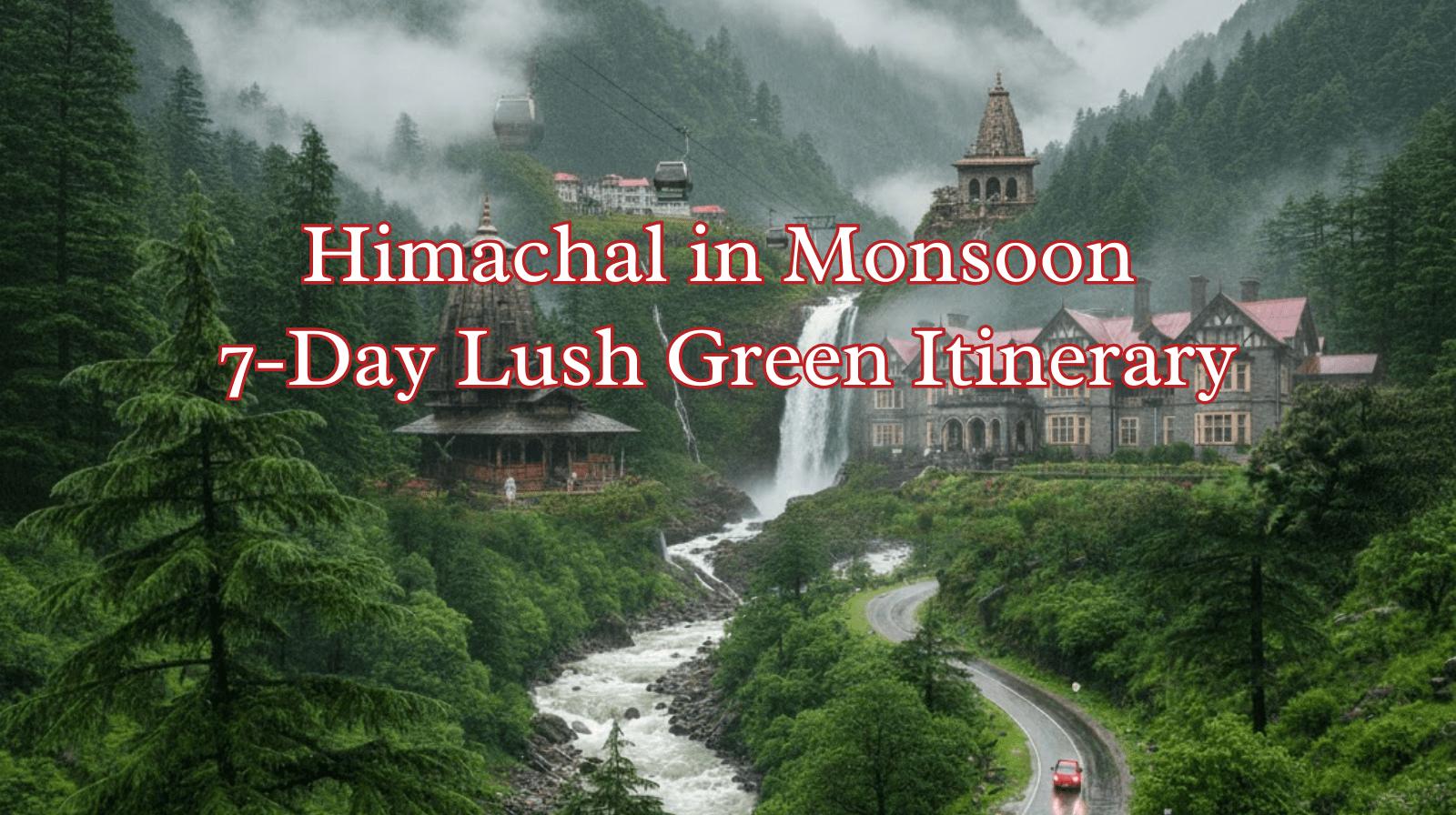
A Journey Through Misty Mountains, Pine Forests & Rain-Kissed Valleys
There’s something magical about Himachal Pradesh in the monsoon. The hills wear a deep green coat, clouds drift lazily through deodar trees, and waterfalls tumble down the cliffs in full glory. While many travellers avoid the mountains during the rains, this is actually one of the most peaceful, scenic, and budget-friendly times to explore Himachal — especially if you’re seeking slow travel, nature, and solitude.
This 7-day Himachal Pradesh Monsoon Itinerary takes you through the lush trails of Shimla, Narkanda, Sangla, Kalpa, and Jibhi, offering a perfect blend of scenic drives, charming villages, and offbeat escapes. Monsoon adds a poetic charm to the hills — and with a smart route (avoiding landslide-prone areas), you’ll witness Himachal like never before.
Whether you’re a solo traveler, couple, or nature-loving group, this route promises rain-washed serenity and unforgettable memories. So, pack your raincoat and get ready for an emerald escape.
Day 1 – Arrive in Shimla: The Queen in the Mist
Route: Chandigarh/Kalka → Shimla (3–4 hrs by road)
Start your monsoon escape with a scenic drive or train ride to Shimla, the erstwhile summer capital of British India. During the monsoon, Shimla is blanketed in mist and surrounded by lush green hills, giving it an old-world romantic charm.
Things to Do:
- Take a leisurely stroll along Mall Road and soak in the colonial architecture.
- Visit Jakhoo Temple for panoramic views — if the fog lifts!
- Drop by Christ Church and Ridge for iconic photo ops.
- Warm up with a cup of chai at Café Simla Times or Wake & Bake.
Where to Stay:
- Budget: Hotel Dreamland | ₹1,200–1,800
- Mid-range: Snow Valley Resorts | ₹2,500–3,000
- Luxury: The Oberoi Cecil | ₹7,000+
Monsoon Tip: Start your sightseeing early in the day. Afternoons in Shimla during monsoon often bring heavier showers
Day 2 – Shimla to Narkanda: Forest Drives & Hidden Peaks
Route: Shimla → Narkanda (60 km / 2.5–3 hrs)
As you leave behind Shimla’s colonial buzz, the road to Narkanda weaves through thick pine forests and terraced apple orchards — all glistening fresh from the rains. Narkanda remains beautifully untouched and far quieter than Shimla, making it ideal for a monsoon stop.
Things to Do:
- Drive or trek to Hatu Peak (best in the morning) for sweeping views, foggy ridges, and dense cedar woods.
- Visit a local apple orchard — July marks the early apple season.
- Enjoy a misty walk through the village trails and old Himachali homes.
Where to Stay:
- Budget: Hotel Hatu (HPTDC) | ₹1,200–1,800
- Mid-range: Tethys Himalayan DEN | ₹2,000–3,000
- Homestay: Echor Narkanda | ₹2,500+
Monsoon Tip: Carry waterproof shoes — trails around Hatu can get muddy but are well worth it for the views.
Day 3 – Narkanda to Sangla: Into the Rain-Washed Valleys of Kinnaur
Route: Narkanda → Sarahan → Sangla (160 km / 6–7 hrs)
This drive is long but breathtaking. Pass through Rampur and take a detour to Sarahan if time permits — home to the famous Bhimakali Temple. As you enter Kinnaur Valley, the terrain changes dramatically, becoming more rugged yet still draped in green during the monsoon.
Arriving in Sangla, you’ll find yourself surrounded by alpine scenery, slate-roofed houses, and the calming sound of the Baspa River. The air here smells of pine and wet earth — perfect for unwinding after a long day’s journey.
Things to Do:
- Enjoy the riverside walk along the Baspa River.
- Explore the peaceful Batseri village, known for its traditional Himachali architecture.
- Visit Kamru Fort, nestled above Sangla village.
Where to Stay:
- Budget: Hotel Mount Kailash | ₹1,000–1,500
- Mid-range: The Monk Kalpa/Sangla | ₹2,000–3,000
- Riverside Stay: Banjara Camps & Retreats | ₹3,500+
Monsoon Tip: This route is fairly stable during rains, but start early in the day and avoid traveling post-sunset.
Day 4 – Sangla to Chitkul: The Last Village Before Tibet
Route: Sangla → Chitkul → Sangla (20 km / 1 hr one way)
Wake up to the sound of rain gently tapping your windows and set out for a day trip to Chitkul, the last inhabited village near the Indo-Tibet border. The short drive from Sangla is like a dream — winding through cedar groves, cascading waterfalls, and mist-covered ridges.
At 11,320 ft, Chitkul feels like another world. During the monsoon, the meadows are bright green, flowers bloom wildly, and clouds roll over the wooden rooftops — it’s peaceful, remote, and raw.
Things to Do:
- Walk to the Baspa River banks for serene photo spots.
- Eat rajma-chawal or maggi at Hindustan ka Aakhri Dhaba.
- Explore Chitkul village on foot — no itinerary needed here, just nature and silence.
Where to Stay:
Return to your stay in Sangla or opt for a cozy wooden guesthouse in Chitkul if you’d like to spend the night (subject to weather).
Monsoon Tip: Roads to Chitkul are mostly safe during early monsoon but check local updates — occasional fog and drizzle make the experience magical, but drive cautiously.
Day 5 – Sangla to Kalpa: Kinner Kailash in the Clouds
Route: Sangla → Kalpa (40 km / 2–3 hrs)
On Day 5, head to Kalpa, a quiet Himalayan town perched high above the Sutlej River. With Kinner Kailash peeking in and out of the clouds, Kalpa during monsoon feels straight out of a fairytale. The scent of apple blossoms and wet pine fills the air.
This is the day to relax, wander, and soak in mountain life without rushing.
Things to Do:
- Visit the Suicide Point & Roghi village for jaw-dropping cliff views.
- Explore the Kalpa Monastery and nearby temples.
- Try local Himachali cuisine – especially Siddu and Madra.
Where to Stay:
- Budget: Hotel Rolling Rang | ₹1,200–1,800
- Mid-range: Hotel Apple Pie | ₹2,000–2,500
- Scenic Stay: The Grand Shambala | ₹3,000+
Monsoon Tip: Kalpa is safe and peaceful in the rainy season. The road from Sangla is narrow but open — start in the morning and drive slowly.
Day 6 – Kalpa to Jibhi: A Scenic Cross-State Drive
Route: Kalpa → Rampur → Jalori Pass → Jibhi (230 km / 8–9 hrs)
Today’s journey is long but incredibly rewarding. You’ll drive through varying landscapes — from dry Kinnaur cliffs to the lush green slopes of Banjar Valley. If you’re an early riser, this cross-state transition will feel like watching the monsoon paint its way across Himachal.
The highlight is the ascent over Jalori Pass (if open), wrapped in mist and lined with wildflowers — it’s one of the most magical places during the rainy season. Once you descend into Jibhi, you’ll be welcomed by riverside cottages, dense forests, and peaceful vibes.
Things to Do (late afternoon/evening):
- Visit Jibhi Waterfall, tucked inside the forest.
- Enjoy a hot meal in a rustic café (try Hari Om Café or Mudhouse Hostels)
- Relax by the Tirthan River and listen to the rain.
Where to Stay:
- Budget: Hosteller Jibhi | ₹800–1,200
- Mid-range: Gone Fishing Cottages | ₹2,500–3,000
- Luxury: The Forest Edge | ₹4,000+
Monsoon Tip: If Jalori Pass is closed (due to landslides), reroute via Mandi. It’s longer but still beautiful — ask locals or Google Maps for current road status.
Day 7 – Explore Jibhi & Departure
Use your final day to breathe in the serenity of this hidden Himalayan gem. Monsoon in Jibhi is peaceful and rejuvenating — perfect for short hikes or just journaling by the river.
Things to Do:
- Visit Mini Thailand, a secret pool carved in stone (careful in heavy rain)
- Trek to Serolsar Lake (if the trail is clear)
- Shop for handmade crafts at the local flea market
Depending on your onward plan, head towards Aut, Bhuntar, or Mandi for your departure — or simply extend your stay because trust us, you’ll want to.
Departure Tip:
Plan your transport buffer. Rain may delay buses or shared cabs — especially in the Banjar region
What to Pack for Himachal in Monsoon
- Lightweight waterproof jacket or poncho
- Sturdy waterproof trekking shoes
- Warm inner layers (sweatshirt, fleece, thermals)
- Quick-dry trousers and clothes
- Umbrella + backpack rain cover
- Travel insurance and ID copies
- Mosquito repellent, basic meds, power bank
- Reusable water bottle, small towel, ziplock bags
Pro Tip:
Pack light but smart — some routes may require you to carry your own bag on foot for short stretches.
Conclusion: Monsoon in Himachal Pradesh
Experiencing Himachal Pradesh in the monsoon is unlike any other Himalayan journey. The lush green landscapes, mist-covered mountains, rain-washed valleys, and peaceful offbeat towns make this season perfect for travelers seeking calm, nature, and authentic local culture. With this 7-day Himachal monsoon itinerary covering Shimla, Narkanda, Sangla, Chitkul, Kalpa, and Jibhi, you get the best mix of scenic drives, budget-friendly stays, and safe routes for the rainy season.
If you’re planning a monsoon trip to Himachal in 2025, this guide ensures a smooth, beautiful, and memorable mountain getaway. Pack smart, travel slow, and let the rains reveal Himachal’s most magical side
Ready to explore Himachal this monsoon?
Start planning your perfect 7-day trip today — and let the mountains surprise you!
FAQs About Monsoon Travel in Himachal
1. Is it safe to visit Himachal Pradesh during the monsoon?
Yes, it is generally safe if you follow a well-planned route and avoid known landslide zones. Always start early and check weather updates before travel.
2. Which places are best to visit in Himachal during the rainy season?
Shimla, Narkanda, Sangla, Kalpa, and Jibhi are beautiful and relatively safe. Avoid upper Spiti or Manali–Leh during peak monsoon.
3. What should I pack for a monsoon trip to Himachal?
Carry a rain jacket, waterproof shoes, warm layers, quick-dry clothes, backpack cover, and essential medicines.
4. Are roads open in Himachal Pradesh during monsoon?
Most major roads remain open, though temporary blocks can happen. Jalori Pass and remote Kinnaur routes may close — always check locally.
5. What’s the budget for a 7-day monsoon trip in Himachal?
₹10,000 to ₹25,000 per person depending on your travel style (budget/luxury). Homestays and buses help keep costs low.
6. Are there any special festivals in Himachal during monsoon?
Yes, the Minjar Fair in Chamba and local apple festivals in Kinnaur begin around late July or August.
7. Is it a good time for photography or videography?
Absolutely! The landscapes are vibrant and dramatic — with flowing rivers, foggy peaks, and rich greens.
8. Can I travel solo to Himachal in monsoon?
Yes, but choose well-connected and tourist-friendly places like Shimla, Jibhi, and Kalpa for better safety and support.
9. Are there good food options available during monsoon?
Yes, local dhabas, cafes, and homestays offer warm Himachali and North Indian meals. Try Madra, Siddu, and thukpa.
10. How do I book stays in monsoon?
You can book via platforms like Booking.com, Airbnb, or even on arrival, as monsoon sees fewer tourists.